
Lagos Govt, Stakeholders Explore Adaptive Measures To Tackle Nigeria’s Inflation Challenges
The Lagos State Government, alongside leading figures in business, finance, policy, and consumer advocacy, held a high-level dialogue on Friday to identify sustainable strategies for tackling Nigeria’s rising inflation and escalating cost of living pressures.
The engagement took place at the Lagos Country Club, Ikeja, during a business forum organised by the Club themed: “Inflation, Cost of Living and Consumer Purchasing Power: Adaptive Strategies for Nigeria.” The forum provides an avenue for discussions on how to reshape household welfare, business operations, and overall economic stability.
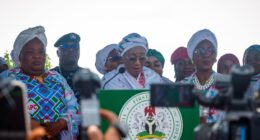
Representing the State Government, the Honourable Commissioner for Wealth Creation and Employment, Hon Akinyemi Ajigbotafe emphasised the urgency of coordinated, evidence-based measures to protect consumer purchasing power and support residents through the current economic headwind
He noted that while inflation moderated to 16.05% in October 2025 from 18.02% the previous month driven by improved harvest output and currency adjustments, the cost of living burden remains heavy on households.
Describing inflation as “a thief that steals from our collective future,” he highlighted the persistent rise in rents, transport fares, and food prices, which continue to weaken real income levels, now benchmarked at N430,334:00 monthly for rural families.
The Commissioner reiterated that the Ministry remains committed to developing and implementing policies that support supply chain efficiency and economic sustainability for Lagos residents. He further noted that Governor Babajide Sanwo-Olu’s T.H.E.M.E.S Plus Agenda continues to cushion inflationary pressures through skills development, targeted empowerment, and job-creation initiatives.
He also drew attention to the low-interest loan facilities provided by the Lagos State Employment Trust Fund (LSETF), which complement recent Central Bank of Nigeria (CBN) reforms aimed at easing financial strain on individuals and small businesses.
Earlier, the President of the Lagos Country Club, Mr Seyi Adewunmi, welcomed participants and stressed the need for deliberate strategies to safeguard consumer purchasing power and enhance business resilience.
Guest Speaker, Hon. Dele Kelvin Oye, Chairman of Economic Research and Ethics Ltd and former Chairman of the Organised Private Sector, traced Nigeria’s inflation pressures to supply-chain disruptions, rising energy costs, currency volatility, and global economic shocks. He called for closing demand and supply gaps and reducing governance costs to improve productivity.
Economic expert, Dr Paul Alaje further analysed the impact of exchange-rate fluctuations and import dependency on commodity prices. He noted that declining real income has shifted consumer behaviour toward low-cost, value-driven alternatives.
He recommended strengthening local manufacturing, investing in technology-enabled supply chains, and accelerating digital transformation to reduce import reliance and stabilise prices.
A major highlight of the forum was the presentation of an award to the Honourable Commissioner, Ministry of Wealth Creation and Employment, Hon Akinyemi Ajigbotafe, in recognition of his contributions to economic empowerment and job creation in Lagos State.