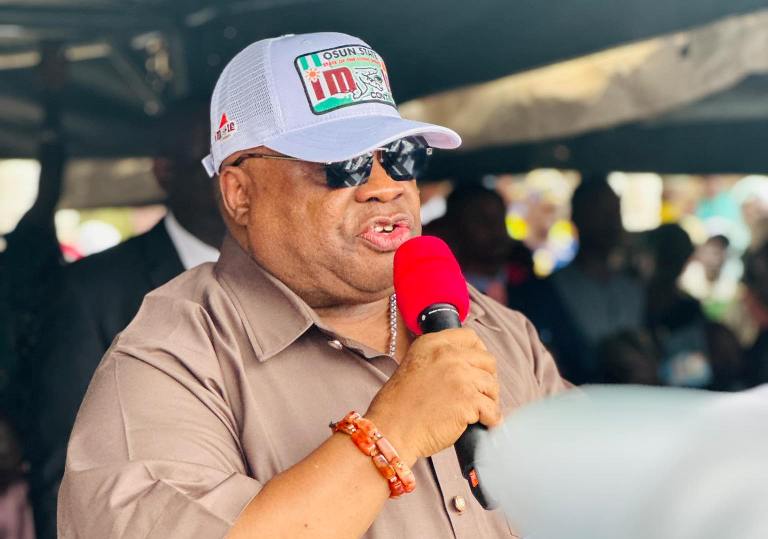

From Hope To Disillusionment: Why Many Of Adeleke’s Foot Soldiers Are Losing Faith
By Tolu Babawale
Politics is often described as a game of loyalty, sacrifice, and reward. In Osun State, thousands of members of the Peoples Democratic Party (PDP) and the Accord Party demonstrated extraordinary commitment in the build-up to the 2022 governorship election that brought Governor Ademola Adeleke to power.
After spending more than a decade in opposition, party faithful traversed towns and villages like missionaries, canvassing support, mobilising voters, funding grassroots activities, and persuading eligible citizens to register and participate in the electoral process. Many invested their time, resources, and political capital in what they believed would usher in a new era of inclusive governance and shared prosperity.
Four years later, however, a growing number of those same loyalists are reportedly questioning whether their sacrifices have translated into meaningful rewards.
*The Reality of Grassroots Discontent*
For many grassroots PDP and Accord members, the excitement that accompanied the party’s return to power has gradually given way to frustration and disappointment.
They argue that, beyond a handful of political appointments, there has been little tangible recognition of the enormous efforts that delivered victory at the polls.
Those who secured positions as caretaker chairmen and councillors at the local government level had anticipated greater opportunities to serve their communities. Instead, many now lament what they describe as limited influence and constrained capacity, particularly amid the prolonged local government autonomy and administrative challenges that have affected governance at the grassroots level.
The prevailing sentiment among many party supporters is that they have waited patiently for the dividends of their political labour, only to be met with uncertainty and unfulfilled expectations.
The discontent is not limited to party members alone. Traditional rulers who openly supported Governor Adeleke’s emergence are also said to be dissatisfied. Some have expressed concerns about what they perceive as declining financial support and diminished relevance in government affairs. While many have chosen to remain publicly silent, there is growing speculation that not all is well within that constituency of support.
*The Geopolitics of Development*: The ‘Ede Question’
Perhaps the most contentious issue confronting the administration is the widespread perception of uneven development across the state.
Critics argue that infrastructure projects have been disproportionately concentrated in Ede, the Governor’s hometown. They point to extensive road construction and urban renewal projects in the town as evidence of what they consider an imbalance in developmental priorities.
Whether accurate or not, perception remains a powerful force in politics. Increasingly, many residents believe that Ede has become the primary beneficiary of government attention, creating resentment in communities that feel overlooked.
Patronage, Preferential Treatment and Quiet Whispers
Concerns about favouritism have also surfaced in discussions surrounding public-sector recruitment.
Critics have questioned the geographical spread of recently recruited teachers and other public servants, alleging that certain areas received preferential treatment. Whether these claims are supported by official data or not, they have become part of a broader narrative being used by opponents of the administration to challenge its commitment to fairness, equity, and inclusiveness.
Even among political appointees, there are quiet whispers of dissatisfaction.
Financial Constraints: Some insiders reportedly complain about limited resources and opportunities within government.
Diminished Influence: Unlike previous administrations, where public office was often associated with significant political influence and economic benefits, some appointees privately suggest that expectations have not matched reality.
Masked Frustration: As a result, public declarations of loyalty and political slogans increasingly appear to conceal underlying frustrations among sections of the political class.
The Road to the Next Electoral Cycle
Yet, the greatest challenge facing Governor Adeleke may not come from the opposition. Rather, it may stem from the growing disillusionment among those who worked hardest to bring him to power.
History has shown that political victories are secured not only by candidates but also by armies of committed supporters who believe in a cause. When those supporters begin to feel neglected, the consequences can be profound.
As Osun gradually moves toward another electoral cycle, the Adeleke administration faces a critical test:
Can it rebuild confidence among its grassroots base?
Can it reassure stakeholders across all regions of the state?
Can it convince voters that its developmental agenda is inclusive rather than selective?
The answers to these questions may ultimately determine whether the political coalition that delivered victory in 2022 remains united in the years ahead.
For now, what was once a movement fuelled by hope increasingly appears to be a constituency wrestling with disappointment, uncertainty, and a growing desire for greater inclusion in the governance of Osun State.
— Tolu Babawale, a political scientist and youth leader writes from Iba, in Ifedayo Local Government Area of Osun State.