
How To Create A Year-Round, Fail-safe, Winning Capsule Wardrobe – Omoluwabi by KB CEO, Kunle Bakare
Do you want to stride sure-footedly onto the well-dressed list? Prance alongside dandies and those dressed to the nines? Please, start with the capsule wardrobe! It is a sure-fire avenue that lands you on the high street of style, hands you the keys of a well-appointed, functional and chic pad in the best part of town.
It doesn’t demand an arm and a leg. Just a well-laid plan, meticulous and painstaking attention to details, while you assemble winning interchangeagle pieces that create rhythmic and harmonious grooves. Your ensembles echo symphonies of ecstacy as you intentionally go through your everyday engagements. What’s more, you can enlarge the wardrobe as your resources skyrocket.
The capsule wardrobe—first mentioned in the 70s by a London boutique owner Susie Faux, gained more popularity in the 90s—is an assemblage of essential clothing items (between 20 and 60, or more) which can be mixed and matched to create a large wardrobe. Because the items work together, they translate to humongous ensembles with heartwarming possibilities.
The capsule wardrobe reduces decision fatigue [1], saves time and money, stretches your creativity and expands the multiple varieties of ensembles at your beck and call, aside elevating your personal style.
From simplifying your getting-ready and off-to-engagement routines, it allows you to concentrate on quality pieces and timeless drapes which catapult you to a dresser to serenade.[2]
To create a year-round, fail-safe, winning capsule wardrobe, you should first define your lifestyle and purpose (as you consider all the activities that bring you joy and money):
o Lifestyle: work, leisure and events that populate your calendar.
o Personal style: classic, trendy or minimalist.
o Body type and proportion: ectomorph (lanky, with little flesh and muscle), mesomorph (athletic and muscular), endomorph (rounded and big), rectangular (minimal curves) and triangular (large chest and smaller waist).
o Budget: how much are you willing to spend without being in debt?
Once you have worked out all these elements, you should decide your colour palette. And we recommend black, white, tints of blue, grey and brown for starters (your accessories can parade a bit more colour).
These sombre colours of seriousness admit you to the class of unpretentious go-getter. The muted hues are appropriate all-year round in ensembles of choice—from professional to leisure and more.
They announce that you have learnt the tinctures of timeless style and ready to pay more than your fair share to making the world better, happier and more prosperous.
So, let’s go into the activities that populate your life: work and business, casual and formal events and Worship.
Remember, the objective is to assemble the most elegant duds your resources can accommodate!
For work and business, you should aim to start with 10 essential ensembles (but you only need four pairs of shoes at starters).
§ Let’s say your business permits the traditional kaftan set:
You should have 10 sets of kaftan and trousers (with eight well below your derrière and nearer your knees, and two reaching your calf for more serious business activities). So, you can choose two apiece in tinges of blue, grey, brown, black and white.
And you will require classic black and brown loafers (preferably leather), not drivers or moccasins.
§ If you are in tech, arts and the like, you should go for the smart casual mode:
We suggest two blazers in navy and charcoal grey for pitches and meetings, two or three formal trousers in shades of grey, blue, or brown, dress shirts (white and pastels), chinos (black, grey, blue, burgundy and tan), polo and casual shirts and, at least, one pair of black Oxford, loafers and leather sneakers.
You can put together 10 ensembles from the list.
§ If your preoccupation (maybe in finance) demands more formal attire:
Suits are your go-to garments. And you should have, at least, four: in navy, blue, charcoal and dark grey. And choose trousers that don’t require belts (with side adjusters). If you opt for white shirts, you are starting right (and five to 10 will perform wonders). Ten plain and textured ties (which don’t attract attention), with three or four plain white cotton pocket squares, are winners. And four pairs of shoes—Oxford, semi-brogue, brogue and a monk (three in black and one dark brown) are adequate.
For casual and formal events, six ensembles will give you a head-start. Your preference (traditional or ‘continental’) will determine what your collection parades. But you need a hand-embroidered white agbada, a well-made 3-piece tuxedo in black or midnight blue (with all the accompaniments of white shirt, black bow tie, ankle-length socks, patent Oxford, white pocket square and more), a shin-to-ankle-length kaftan in navy and grey, a dark suit for formal events. And blazers, trousers and shirts, or mid-length kaftan and trousers combo for semi-formal gigs.
For casual activities, your jeans and chinos with polo and t-shirts, buba and sokoto, sneakers and sandals will serve you well.
Worship demands formal garbs (fabulous Friday togs, superlative Saturday regalia, or superb Sunday best). And four ensembles will accompany you sartorially over the year (with each rotated only once a month). You can opt for suits or traditional apparel.
Don’t forget that you should buy two watches: one for everyday activities and the other for special occasions.
As you meticulously weave the threads of your capsule wardrobe, a tapestry of timeless elegance will unfold. Your carefully chosen pieces will eliminate decision fatigue as a confident style emerges. Your curated collection becomes a reflection of your essence, a symphony of self-expression that harmonises work, leisure, and Worship. Simplicity, which is the unadulterated language of elegance of the high-octane mode, transforms your world and showcases a masterpiece of effortless chic, crafted with intention and worn with a suffusion of joyfulness.
–Kunle Bakare for Omoluwabi by KB (Sunday, 03.11.2024)
- Decision Fatigue, also known as Decision Paralysis, was first introduced by social psychologist Roy F. Baumeister, Ellen Bratslavsky, Mark Muraven, and Dianne M. Tice in their 1998 research paper, ‘Ego Depletion: Is the Active Self a Limited Resource?’
The term simply refers to your brain getting tired after too many decisions, with increasing difficulty in making more decisions.
And Messrs Barack Obama, Femi Otedola, Mark Zuckerberg, Ayeni Adekunle and late Steve Jobs and Albert Einstein are great examples of those whose garments are like uniforms (which reduces decision fatigue). - ‘Buy less, choose well.’
-Vivienne Westwood (1941–2022), a British fashion designer, activist, and entrepreneur.
‘A capsule wardrobe forces you to confront your style and priorities.’
-Anuschka Rees, a renowned German-American blogger, author, and fashion expert.
‘Editing your wardrobe edits your life.’
-Courtney Carver, celebrated o blogger, author, and simplicity expert.
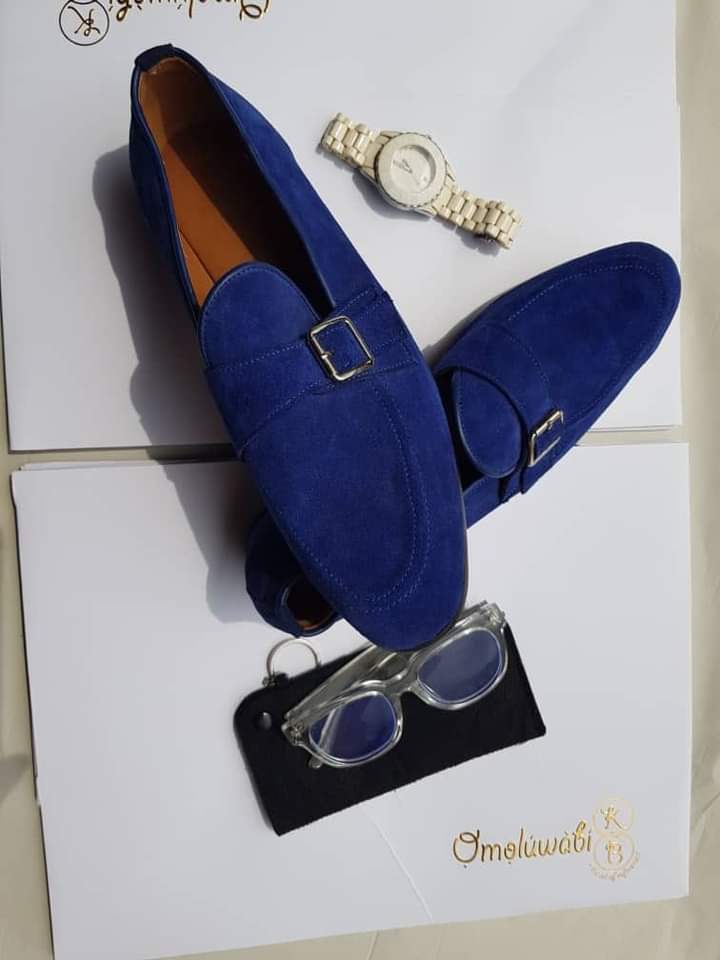
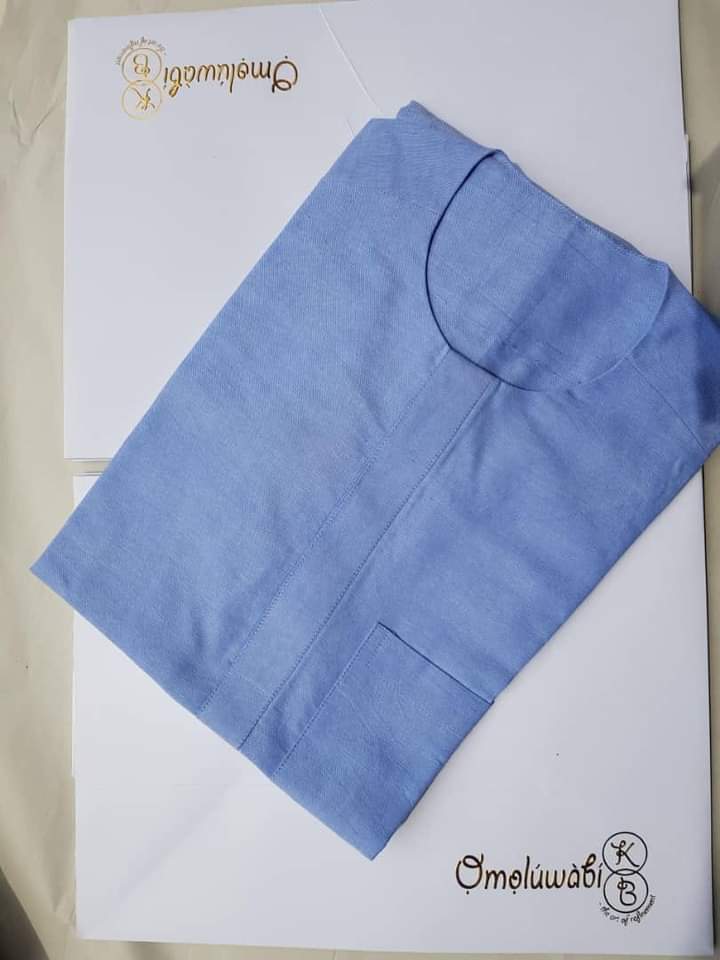
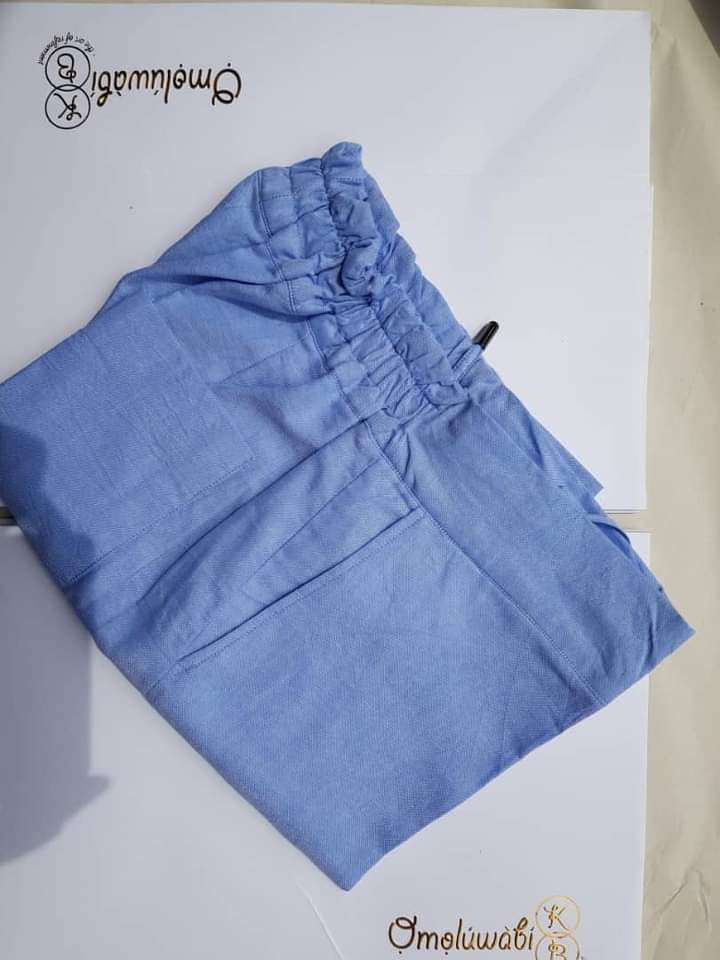
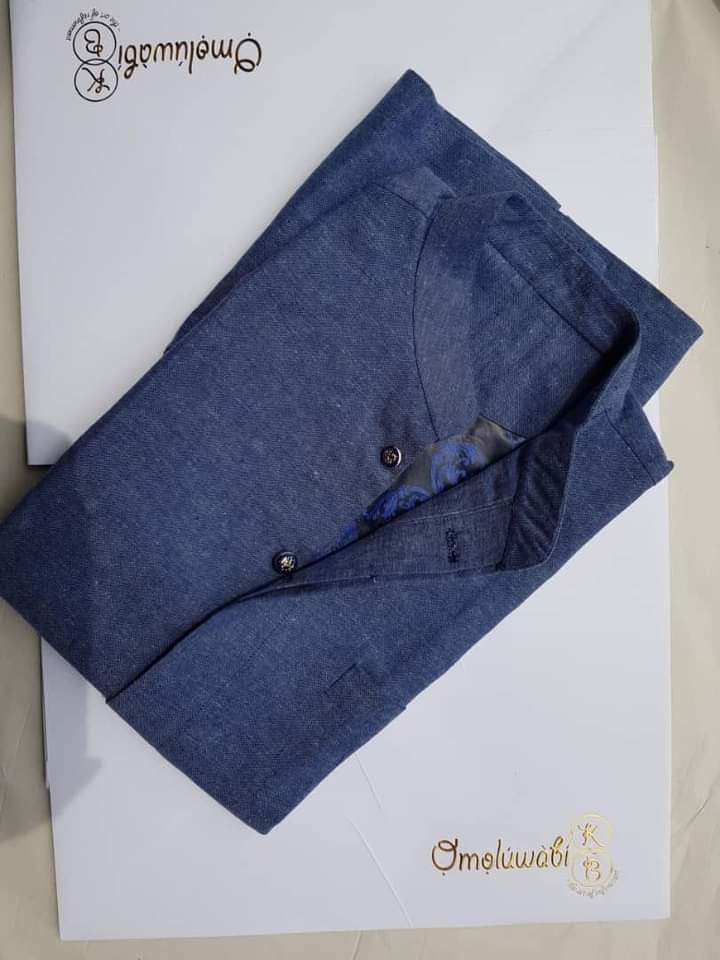
*NB: the accompanying pictures parade a blue 3-piece linen kaftan set, blue nubuck loafers with decorative buckles, a watch and reading glasses.