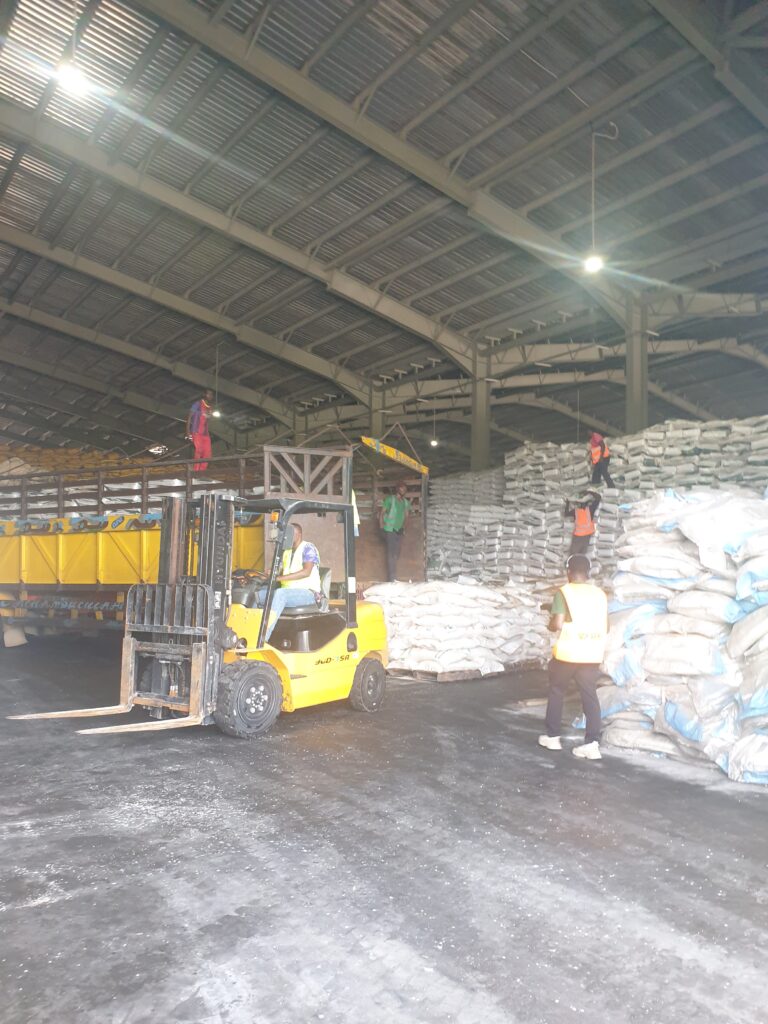

Inside President Tinubu Govt’s Fertilizer Revolution Powering Food Security In Nigeria
The administration of President Bola Ahmed Tinubu is on a clear mission to ensure food security across the length and breadth of Nigeria. The government’s strategy is straightforward: making fertilizer accessible and affordable for both commercial and smallholder farmers nationwide.
This strategic initiative, built on the administration’s “Renewed Hope” agenda, is being driven through the Presidential Fertilizer Initiative (PFI-NPK) and managed by the Ministry of Finance Incorporated (MOFI).
Under the supervision of Dr. Armstrong Takang, MOFI proactively executed President Tinubu’s directive to secure critical fertilizer raw materials—specifically DAP, MOP, and Gas. By locking in these essential resources, which are not locally available, the government successfully shielded Nigeria from the severe supply chain fallouts caused by the closure of the Strait of Hormuz.
This singular, proactive move saved Nigeria approximately N60 billion, a milestone disclosed by Dr. Takang during a recent interview on Channels Television.
Speaking further on President Bola Ahmed Tinubu’s directive on food security, he stated:
“As part of the directive from Mr President, President Bola Ahmed Tinubu GCFR to ensure that we aggressively move towards implementing tangible, practical steps to bring about food security… Clearly fertilizer is a major element. And what we had said was that a key part of it is to have market intelligence and to use that source raw materials at the right prices to make sure we have sufficient supply and ensure the materials are available on time for the farming seasons.
“So as part of that strategy Q 4 last year we made a decision to procure in advance fertilizer raw materials, which the MOP, DAP and gas that you mentioned earlier in bulk and we were able to bring in over 500 thousand metric tonnes of the raw materials into the country. Just before the escalation of hostilities in Iran and of course the Straits of Hormuz. What that meant was that we were able to secure the raw materials at the prices that were very low prior to increase in those prices as result of the challenges at the straits of Hormuz. It also meant we were able to secure supply of fertilizers for our farmers in readiness for the current season. And that way we actually ensure we were not affected significantly what happened in terms of prices and shortage of supply through that early procurement that we took under the directive of Mr President to ensure that we are contributing towards food security.”

Mr. Takang also highlighted the significant role of the Presidential Fertilizer Initiative (PFI) in selling, at no-profits, raw materials to blending plants affiliated with the Fertilizer Producers and Suppliers Association of Nigeria (FEPSAN).
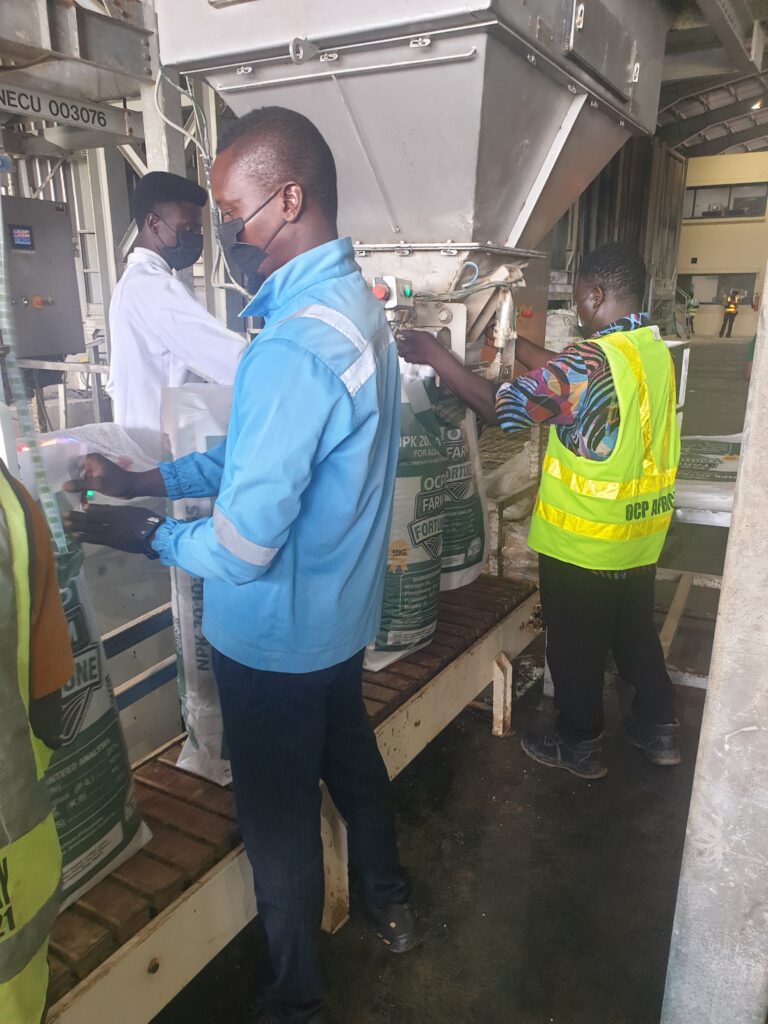
An on-site inspection of the OCP Africa Blending Plant in Kaduna, led by Senior Presidential Aide Otega Ogra, highlighted how the current administration’s agricultural strategies are delivering real-time benefits to Nigerian farmers. During the tour, the plant’s General Manager, Mr. Peter Amahwe, detailed the specifics of their operations. Notably, the OCP Africa Blending Plant has pioneered the creation of custom, crop-specific, and soil-specific fertilizer blends, moving away from generic, one-size-fits-all formulas.
Explaining the impact of this approach, Mr. Amahwe said: “At the end of the day, what is key is that when the farmer pays for these nutrients, he knows exactly what he is getting. He uses those nutrients to plan his activities. If you sell a nutrient that differs from what is written on the bag, you disrupt his entire plan. His labor, his investment in buying seeds—everything depends on high-quality input to ensure a good output.”
Following a two-hour facility tour at the OCP Africa Plant, Mr. Ogra and his delegation proceeded to the Barbedos Fertilizers & Blending Company Limited, also in Kaduna.
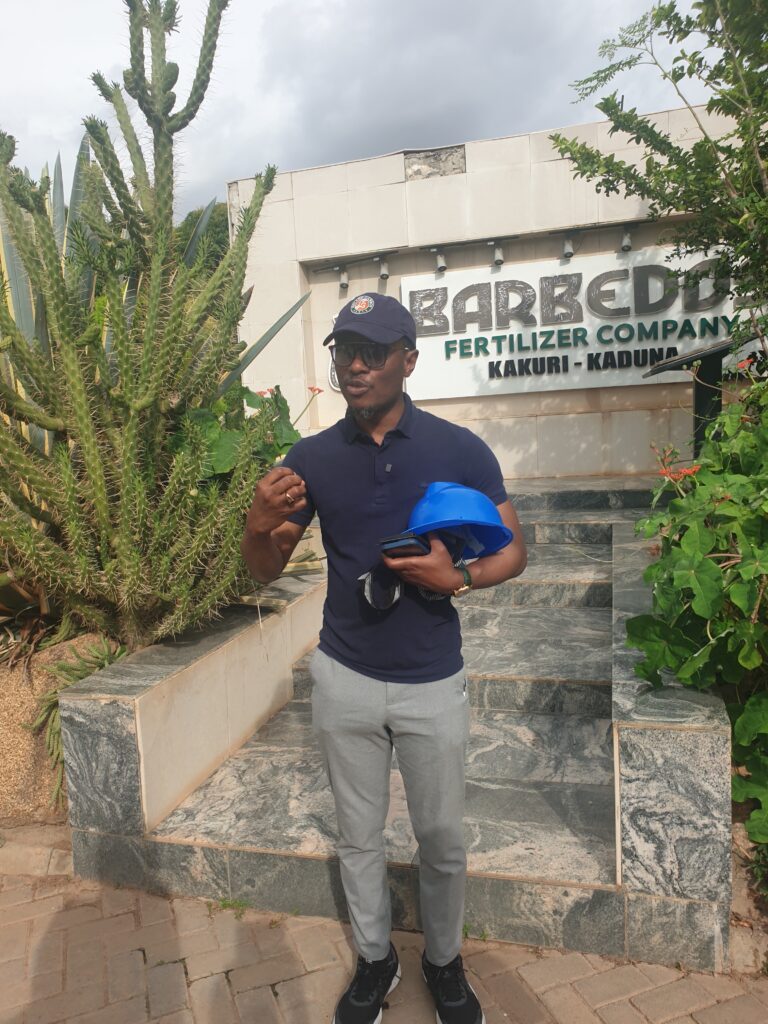
The Production Manager, Mr. Nasser Ismail, welcomed the delegation to the 90-metric-ton-per-hour capacity facility. He highlighted reduced production costs and job creation as major gains of local manufacturing.
“Our primary objective is to produce high-quality fertilizer blends that are specifically tailored to meet the distinct soil and crop requirements of Nigerian farmers,” Mr. Ismail said. “By blending locally, we are reducing costs, creating hundreds of direct and indirect jobs for the youth here in Kaduna, and directly supporting the President’s Renewed Hope Agenda.”
Reflecting on the benefits of using locally sourced raw materials, Mr. Ogra noted: “When we have 80% of the raw materials in Nigeria to produce fertilizers, why should we import them? Local fertilizers with proper quality control will improve farming standards and boost output. This ensures food security guarantees, higher crop yields, and less pest resistance. Ultimately, it secures both food security and food sovereignty for our country.”