More Than A Retreat, A Generation Organises Itself: City Boy Movement 2026 National Retreat Kicks Off
By O’tega Ogra
There are moments in politics when speeches are enough, and there are moments when structures matter more than slogans. What is unfolding this week in Abuja belongs firmly to the second category.
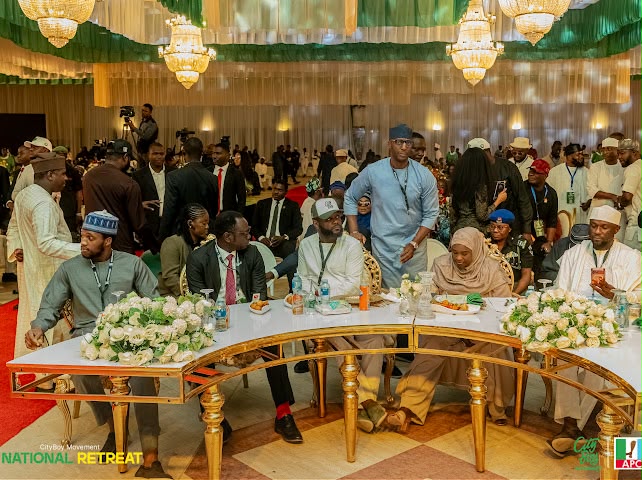
On Monday evening July 13, 2026, the City Boy Movement opened its maiden National Retreat with an act that many political gatherings in Nigeria would consider an afterthought: the formal swearing-in of its National Working Committee and State Directors, each taking an oath to uphold the Movement’s constitution with integrity, loyalty and dedication. Delegates travelled from all 36 states and the Federal Capital Territory. Before a single strategy session had convened, the Movement had done something Nigerian political organisations rarely do. It had bound its leadership to rules rather than personalities.
That detail matters more than the pageantry surrounding it, because Nigeria itself is at an inflection point. Difficult economic reforms are taking root. Old assumptions about how the country is governed, financed and secured are being tested in real time. In such moments, political organisations face a choice: remain campaign vehicles assembled around election cycles, or evolve into enduring institutions capable of educating, organising and mobilising citizens for the longer work of nation-building.
The City Boy Movement has, visibly and deliberately, chosen the latter.
The arithmetic behind that choice is not sentimental. Nigeria is one of the youngest large countries on earth, with a median age below twenty. At the last general election, nearly two in every five registered voters were between the ages of 18 and 34. No serious assessment of Nigeria’s political future can treat this demographic as an afterthought, yet for decades our politics has done precisely that. Youth participation often begins a few months before an election and ends shortly after the ballots are counted. Young people are expected to campaign, amplify, defend policies they were never invited to understand, and then quietly disappear until the next political season.
That model has reached the end of its usefulness. And because Nigeria is Africa’s largest democracy on a continent whose own median age is under twenty, how it succeeds or fails in organising its young people will increasingly become a reference point across the region.
A generation that constitutes the majority of the country’s population cannot remain on the margins of political organisation, useful only as electoral foot soldiers. It must become a partner in governance, policy conversations, community development and democratic accountability. That is the larger significance of this retreat, and it is why one number announced on Monday deserves attention.
The Movement’s Director-General, Hon. Francis Oluwatosin Shoga, set an ambitious target of ten million youth votes for President Bola Ahmed Tinubu in 2027. Yet what made the statement noteworthy was not the number itself but the reasoning behind it. Those votes, he argued, will not come from slogans or social media. They will come from sustained organisation, from wards, campuses, markets and communities, and from the patient, often unglamorous work of remaining present long after political excitement has faded.
That observation is hardly unique to Nigeria. Political movements that endure, whether in established democracies or emerging ones, invest heavily in leadership development, train organisers, build institutions capable of surviving their founders and deliberately mentor those who will eventually replace them. Rallies may dominate headlines. Institutions determine history.
The Movement’s Patron, Barr. Seyi Tinubu, captured the same idea at the opening dinner. The retreat, he told delegates, was not a celebration of yesterday but a preparation for tomorrow. The organisation, he argued, has moved beyond its origins as a campaign platform and is evolving into a vehicle for citizen engagement and national development.
Equally significant was the instruction that followed. Members were challenged to become communicators, educators and mobilisers who engage Nigerians with facts and with empathy, recognising that while early indicators point towards recovery, many citizens still feel the strain of reform in their daily lives. That is not the language of propaganda. It is the language of persuasion.
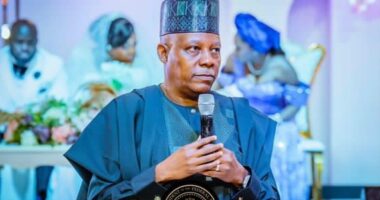
Today the retreat moves to the Bola Ahmed Tinubu International Conference Centre, where Vice President Kashim Shettima is expected to address delegates. His participation completes a remarkable sequence. Only days ago, he paid a courtesy visit to the Movement’s newly established National Secretariat shortly after the APC formally received the Tinubu-Shettima nomination forms for the 2027 election. There, he described organised youth participation as indispensable to building a more prosperous and inclusive Nigeria. Taken together, these developments suggest that the City Boy Movement is increasingly being regarded not merely as a campaign structure but as an emerging component of the country’s broader political ecosystem.
Sceptics will naturally point to the venue and the Movement’s leadership. A youth organisation whose Patron is the President’s son, meeting inside the State House where the opening dinner held, is easily caricatured as proximity mistaken for participation. The criticism deserves engagement rather than dismissal.
Patronage networks rarely swear officers into office under a constitution. They rarely invest in durable structures, publish organisational frameworks or establish measurable objectives against which they can later be judged. More importantly, campaign organisations rarely survive victory. The City Boy Movement chose not to dissolve after the 2023 election. Instead, it expanded across Nigeria’s 774 local government areas, placing increasing emphasis on political education, civic engagement and policy advocacy and is expected to continue well beyond the 2027 elections as a formidable youth advocacy platform.
Whether those ambitions ultimately succeed remains to be seen. But on the evidence of its opening day, the Movement appears determined to build institutions rather than merely organise events.
Supporting the Renewed Hope Agenda, properly understood, requires more than enthusiasm. It requires advocates who understand not only what government is doing but why; leaders capable of explaining difficult reforms honestly, engaging criticism intelligently and recognising that democratic politics is sustained by persuasion rather than perpetual outrage.
It also requires humility. No organisation grows by assuming it already possesses every answer. Strong institutions evaluate themselves honestly, identify weaknesses early and improve continuously. A retreat devoted to reviewing performance, clarifying responsibilities and strengthening internal coordination reflects precisely that instinct.
There is, however, another obligation embedded in the ambition announced this week. A movement that seeks ten million votes also acquires the credibility to insist on results. Student loans must reach students. Skills programmes must produce real employment. Economic recovery must become tangible in the everyday lives of the young Nigerians being asked to defend it.
The most valuable contribution the City Boy Movement can make to government is not applause but honest intelligence from communities across the country, delivered without flattery. The most valuable contribution government can make in return is performance worthy of that advocacy.
Across Nigeria, hundreds of thousands of young men and women have found purpose within the City Boy Movement not because they were promised appointments but because they believe they can contribute to something larger than themselves.
That belief must now mature into competence. Competence in organising, competence in communicating, competence in community engagement, and competence in leadership.
Politics ultimately belongs to those who prepare, not merely those who participate.
As Nigeria continues its journey of economic reform and institutional renewal under President Bola Ahmed Tinubu, its political organisations must evolve alongside the country they seek to serve. That evolution demands discipline over disorder, preparation over improvisation and institution-building over personality cults.
The National Retreat now under way in Abuja is, at its heart, an investment in that future. Its success will not be measured by the speeches delivered over three days, but by the leaders it produces over the years ahead.
For movements, as for nations, the real work begins when the applause ends.
—-
O’tega Ogra is the Senior Special Assistant to President Bola Ahmed Tinubu on Digital Communications, Engagement and Strategy. He also serves as Deputy Director-General of the City Boy Movement, with responsibility for Media, Communications & Public Affairs. O’tega regularly writes at the intersection of politics, public policy, institutional reform and the evolving relationship between government and citizens.