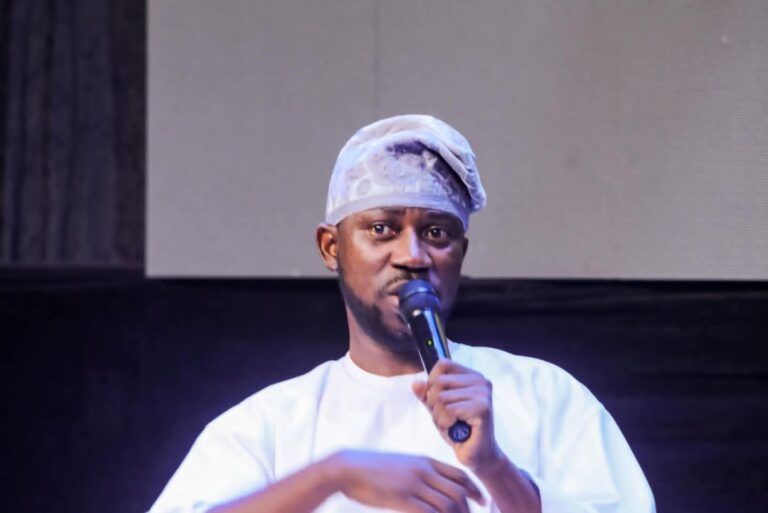

NECLive & BHM Founder Ayeni Adekunle Outlines Bold Plan For Africa’s Creative Industry Funding
At the 2025 edition of the Nigerian Entertainment Conference (NECLive), held on Friday, November 28 at the Landmark Events Centre in Lagos, Ayeni Adekunle Samuel, founder of NECLive and BHM, outlined a bold plan to bridge one of the most persistent gaps in Africa’s creative economy: access to early-stage funding for creators who lack collateral, track record or formal business structures.
NEClive is Africa’s biggest creative conference while BHM, is the African communications services company with global footprints.
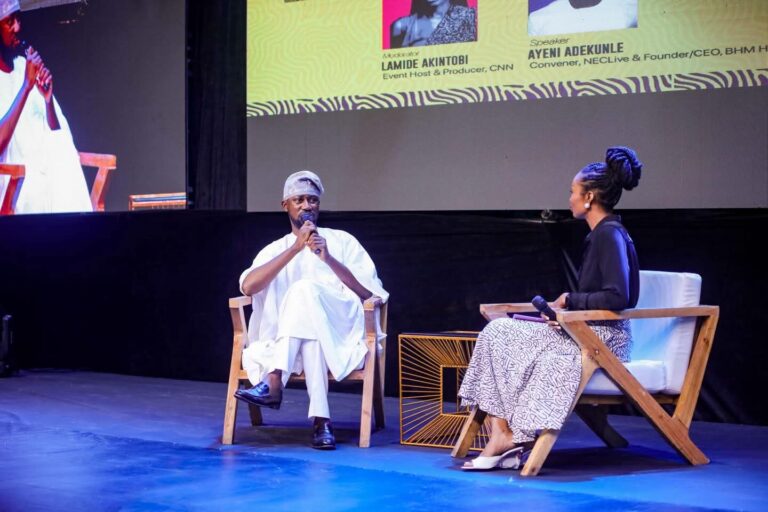
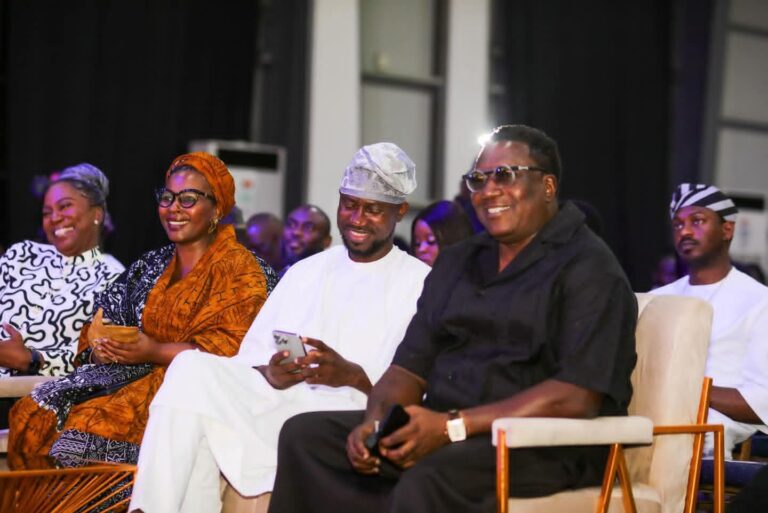
The event, which paraded major stakeholders from media, entertainment, technology, finance, culture and policy, opened with a reflective welcome conversation tagged “The Power To Create,” featuring Ayeni in discussion with Lamide Akintobi of CNN.
Ayeni argued that Africa’s creative sector is growing too fast to depend solely on traditional financing systems that are designed for industries with predictable cash flow and tangible assets.
Banks like Access or institutions such as Chapel Hill, he noted, are structured to lend to businesses that can demonstrate credit history, governance frameworks and long-term stability—conditions most emerging creators cannot meet.
“We are going to be announcing a fund starting next year to pull resources together to be able to fund experiments of people who may not have the credibility or the track record to go to a Chapel Hill or to go to an Access Bank and get funding,” he said, emphasising the need for alternative financing pathways.
Ayeni explained that while creativity has become Africa’s most potent economic, cultural and diplomatic tool, the continent still lacks a funding model suited to the unpredictable, experimental nature of creative work.
Drawing parallels with global venture capital, he said Africa must embrace a structure where investors are willing to bet on ideas with the understanding that only a small percentage may succeed, but the returns can be transformative.
“The startup world has benefited a lot from venture capital—money you can afford to lose. If you get a return on one percent of all the bets you’ve made, it makes up for everything. We need more of stuff like that, and we want to engineer that,” he added.
To address this gap, Ayeni announced plans for a new fund that will support people with powerful ideas but limited access. The fund aims to pool resources from believers in the creative economy and deploy capital toward high-potential projects that traditional institutions would reject as too risky.
More than financing, he said, the vision is to build an ecosystem where creativity is not only encouraged but structurally supported.
Ayeni reinforced his belief that creativity will define Africa’s economic trajectory over the next decade, shaping how the continent tells its story, negotiates its place in global culture and builds future industries.
The conversation set a compelling tone for the day, underscoring his message that Africa cannot rely on old financial structures to build a new creative frontier.