President Tinubu Confers National Honours On 100 Heroes Of Nigeria’s Democracy
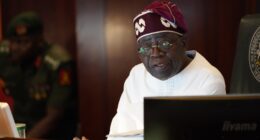
In a landmark Democracy Day address at the joint sitting of the National Assembly, President Bola Ahmed Tinubu paid glowing tribute to individuals—both living and deceased—who sacrificed for Nigeria’s democratic journey, conferring national honours on 100 of them in what he described as a solemn act of justice, gratitude, and remembrance.
President Tinubu said the nation must never forget those who stood up when it mattered most—those who paid with their blood, liberty, and voices to ensure that democracy would take root in Nigeria. He described the June 12 movement as one of the most important moral and political turning points in Nigeria’s history and underscored the sacrifices of many as a reminder of the price of freedom.
Among those honoured posthumously were Kudirat Abiola, who received the CFR, for her courage and martyrdom in the heat of the June 12 crisis. Others included the late Chief MKO Abiola’s political associate and one-time Chief of Staff, Shehu Musa Yar’Adua, Pa Reuben Fasoranti, Senator Abu Ibrahim, and Senator Ameh Ebute. The list also honoured Professor Humphrey Nwosu, the chairman of the National Electoral Commission during the annulled 1993 elections; Rear Admiral Ndubuisi Kanu, a notable voice in the NADECO movement; human rights icon Dr. Beko Ransome-Kuti; fearless lawyer and activist Alao Aka-Bashorun; OPC founder Fredrick Fasehun; literary scholar and unionist Professor Festus Iyayi; and Dr. John Yima Sen.
The list also included unsung heroes of democracy such as investigative journalist Bagauda Kaltho; northern female political pioneer Alhaja Sawaba Gambo; activists Chima Ubani, Emma Ezeazu, and Bamidele Aturu; former Information Minister Labaran Maku; media figures Nick Dazang and Seye Kehinde; writer and poet Odia Ofeimun; and civil society advocates like Barristers Felix Morka and Luke Aghanenu. Notably, President Tinubu extended full state pardons to the nine Ogoni environmental activists executed in 1995—Ken Saro-Wiwa, Saturday Dobee, Nordu Eawo, Daniel Gbooko, Paul Levera, Felix Nuate, Baribor Bera, Barinem Kiobel, and John Kpuine—marking a symbolic closure to one of the darkest chapters in Nigeria’s civil-military history.
Living recipients of national honours included renowned writer and columnist Professor Olatunji Dare, Bishop Matthew Hassan Kukah, activist and former senator Shehu Sani, Kaduna State Governor Uba Sani, human rights lawyer Femi Falana (SAN), Professor Shafideen Amuwo, Professor Bayo Williams, Professor Julius Ihonvbere, and Dr. Kayode Shonoiki. They were joined by media freedom champions such as Kunle Ajibade, Nosa Igiebor, Dapo Olorunyomi, Dare Babarinsa, and Ayo Obe, who kept the flame of truth alive during the military era.
Special recognition was also given to Uncle Sam Amuka-Pemu, founder of Vanguard Newspapers, who turned 90 on June 13, 2025, and has remained a towering figure in Nigerian journalism. The leadership of the National Assembly was also conferred with high honours: Senate President Godswill Akpabio and Speaker Tajudeen Abbas were decorated with the GCON, while Deputy Senate President Jibrin Barau and Deputy Speaker Benjamin Kalu received the CFR. The president emphasized that these honours symbolized the resilience and evolution of Nigeria’s legislative institution since the return of democracy.
President Tinubu concluded by stating that “these awards are not just medals—they are monuments to the memory of those who paved the way. We must never forget them, and we must live up to the freedom they made possible.” He noted that the list was carefully compiled to reflect the broad sweep of Nigeria’s democratic movement—from the barricades of protest to the editorial rooms, the courtrooms, the pulpits, and the halls of government.
This mass conferment, perhaps the most comprehensive recognition of pro-democracy figures in Nigeria’s history, marks a new tone of inclusion, reflection, and healing in the country’s democratic story, coming 31 years after the annulled June 12, 1993 presidential election that many still believe MKO Abiola won. By anchoring today’s gains on the memory of yesterday’s sacrifices, President Tinubu sought to remind Nigerians that democracy is not just a system—it is a legacy forged by heroes.