
Top Executives Advocate Collective Action Against Economic Woes At Nigerian Economic Summit
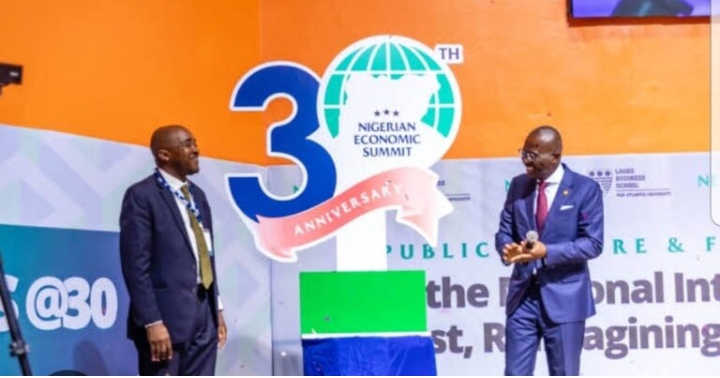
At the recently concluded 30th Nigerian Economic Summit in Abuja, a panel of C-Suite executives from sectors including oil, telecommunications, supply chain, and fast-moving consumer goods (FMCG), gathered to address the pressing need for diversification and sustainable growth in Nigeria’s economy.
Modupe Kadri, Chief Financial Officer of MTN Nigeria, emerged as a key voice during the discussions, emphasizing the critical challenges facing the telecommunications sector. He stated, “We cannot talk about diversification when the industry is bleeding to death.” This assessment highlighted the urgent need for regulatory reforms to support struggling industries.
The summit provided a platform for leaders to share insights on navigating business growth amid economic volatility. While discussing MTN’s efforts to diversify its revenue streams through initiatives such as its fintech division, MoMo PSB, and digital services, Kadri underscored a vital point: “Despite rising operational costs, telecom operators have not been allowed to raise their tariffs.” He called on regulators to reconsider their policies and allow telecom companies to adjust prices in line with economic fluctuations, similar to practices in the electricity and petroleum sectors.
The conversation extended beyond telecommunications. Courage Obadagbonyi, CFO of APM Terminals, emphasized adaptability in today’s market. “Volatility has become the new normal globally,” he remarked.
According to him, the ongoing crisis in the Middle East serves as a reminder of how interconnected global economies are and stressed the importance of resilience and risk management for Nigerian companies.
Nkechi Obi, Group Managing Director of Techno Oil, shared her company’s proactive measures to mitigate the impact of Nigeria’s forex crisis. “Our operations are heavily dependent on Forex,” she explained. “We have had to diversify our sourcing strategies,” which includes collaborating with local suppliers and manufacturing products domestically.
Throughout the panel discussion, the panellists echoed a consensus: without significant policy reforms and a supportive business environment, businesses across all sectors will struggle to thrive amid uncertainty.
Kadri’s remarks served as a rallying cry for collective action among industry stakeholders. He reiterated that while diversification is essential for growth, it must not overshadow the immediate need for sustainability within industries facing dire economic conditions.
As these executives advocate for a collaborative approach to tackling economic challenges, it is clear that addressing regulatory hurdles is paramount for ensuring long-term viability in Nigeria’s complex economic landscape.